Eye Test & Eye Examination in Puchong

Comprehensive eye exams for adults and teens at EyeDeal Optometrist, Bandar Puteri Puchong. Our qualified optometrists use modern equipment to check your vision and eye health. For children, see our dedicated Children's Eye Test service.

🎁 FREE eye test (worth RM100) with any glasses purchase

πŸ’¬ Book Eye Test on WhatsApp πŸ“ž Call to Book

Our eye examinations & screenings

Eye Power Examination
Accurate refraction for your glasses or contact lens prescription.
Binocular Vision Assessment
Checks eye teamwork, lazy eye, depth perception, stereopsis & colour vision.
Glaucoma Screening
Eye pressure & optic nerve check β€” relevant from around age 40 or with a family history.
Cataract Screening
Detects early lens clouding affecting your vision.
Retinal Screening
Fundus camera imaging β€” no dilation needed, drive home straight away.
Contact Lens Fitting
Proper measurement, trial & aftercare for comfortable lenses.
Special Lens Consultation
Progressive, blue-light & high-index lens advice.

Binocular Vision Assessment

Cover test - patient with eye occluder for Binocular Vision Assessment at EyeDeal Optometrist Puchong

Binocular vision assessment evaluates how well your two eyes work together. This comprehensive test checks eye alignment, coordination, depth perception (stereopsis), colour vision, and focusing abilities. It's crucial for detecting conditions like lazy eye (amblyopia), eye misalignment (strabismus), colour vision deficiency, and focusing problems that may not be apparent in standard eye exams β€” making it especially valuable for children.

What's assessed

How it works

The assessment takes about 20–30 minutes and is completely painless and non-invasive, suitable from around age 5. It combines several short tests β€” ocular motility, alignment, fusion, stereopsis, colour vision, and a cover test β€” to build a picture of how your two eyes coordinate together, not just how each eye sees on its own.

Benefits & why it matters

Relevant for anyone with double vision, an eye turn, difficulty judging depth, poor sports performance, or frequent squinting β€” and especially useful for children, since coordination problems aren't always obvious in a standard vision check.

Frequently asked questions

What is lazy eye?

Lazy eye occurs when one eye has significantly better vision than the other, causing the brain to ignore input from the weaker eye.

Can lazy eye be treated?

Yes β€” early detection and intervention (often with eye patches or special glasses) can help improve vision.

Is this test painful?

No, this assessment is completely painless and non-invasive.

Cataract Screening

Cataract screening uses advanced slit-lamp technology to examine the lens of your eye in detail. We look for any cloudiness or opacity that may indicate cataract formation. Early detection is crucial, as cataracts can progressively impair vision if left untreated. Our thorough screening helps determine if intervention is needed.

What's assessed

How it works

A cataract screening takes around 10–15 minutes and is generally recommended from age 40 onward, or sooner if you have relevant symptoms. Your optometrist examines the lens with a slit lamp, grades any cloudiness found, documents it photographically, and evaluates your overall risk.

Benefits & why it matters

Worth considering if you notice blurry or cloudy vision, difficulty seeing at night, glare sensitivity, faded colours, or double vision in one eye β€” or simply as part of a routine check from age 40.

Frequently asked questions

What causes cataracts?

Cataracts develop due to aging, UV exposure, diabetes, or eye injury. They progress slowly over time.

Can cataracts be prevented?

While we can't prevent all cataracts, UV protection and managing health conditions can slow development.

Is surgery the only treatment?

In early stages, stronger glasses may help. Surgery is typically recommended when vision significantly impacts daily life.

Retina Disease Screening

The retina is the light-sensitive tissue at the back of the eye. Diseases affecting the retina can lead to serious vision loss. Our comprehensive screening examines the retina and optic nerve for signs of diabetic damage, age-related macular degeneration, retinal tears, and other conditions. Early detection is vital for preserving vision.

What's assessed

How it works

Screening takes about 10–15 minutes and is suitable for all ages. We use a fundus camera to image your retina, so no dilation is needed β€” meaning no blurry vision afterward, and you can drive home straight away.

Benefits & why it matters

Relevant if you notice floaters or flashes, blurred vision, dark spots, distorted lines, or vision loss β€” and especially important if you have diabetes, since diabetic retinopathy is damage to the retina's blood vessels caused by high blood sugar.

Frequently asked questions

Do I need dilation?

No β€” we use a fundus camera to image your retina, so no dilation is needed. That means no blurry vision afterward and you can drive home straight away.

What is diabetic retinopathy?

It's damage to blood vessels in the retina caused by high blood sugar. Early detection and control help prevent progression.

Can retinal conditions be treated?

Yes, treatments include laser therapy, injections, and surgery depending on the specific condition.

Special Lens Consultation

Optometrist helping a patient select special lenses at EyeDeal Optometrist Puchong

Beyond standard lenses, modern optical technology offers many specialised options. Our consultation helps you choose the right lens technology for your lifestyle, budget, and visual needs β€” from progressive lenses for presbyopia to photochromic lenses that adapt to light, anti-glare coatings, blue-light-blocking lenses, and high-index lenses for stronger prescriptions.

What's assessed

How it works

A consultation takes around 30–40 minutes and suits any age. Your optometrist reviews your lifestyle and visual needs, explains the relevant lens options, lets you trial or see a demonstration where useful, and helps you make a final selection.

Benefits & why it matters

Worth considering if you have presbyopia, notice digital eye strain, are sensitive to glare, or spend a lot of time in bright sun.

Frequently asked questions

What are progressive lenses?

Progressives provide seamless vision at all distances without visible lines β€” suited to presbyopia.

Do blue-light lenses really work?

Yes, they reduce digital eye strain and can improve sleep quality by filtering blue light.

Are high-index lenses worth it?

For strong prescriptions, yes β€” they're thinner, lighter, and more aesthetically pleasing than standard lenses.

Eye Power Examination: how it works & who benefits

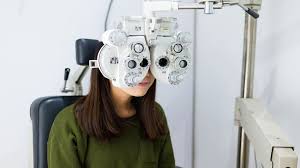
Phoropter refraction testing during an eye power examination at EyeDeal Optometrist Puchong

Eye power examination is a focused refraction test that measures the refractive error of your eyes. Using advanced equipment, our optometrists determine whether you are myopic (short-sighted), hyperopic (long-sighted), or have astigmatism. This is the quick power test for an updated prescription (20–30 minutes) β€” for a full eye-health check, book our comprehensive eye exam above.

Process

Benefits

Frequently asked questions

How often should I get my eyes tested?

We recommend annual eye exams for adults. If you have existing conditions, more frequent visits may be needed.

Can children get this test?

Yes β€” children can get eye power exams from age 4+. Early detection is important for proper visual development.

What is a comprehensive eye examination?

An eye power examination and a comprehensive eye examination are not the same thing. A power/prescription check focuses on one question β€” what lens power do you need? A comprehensive eye examination asks a broader question: how healthy are your eyes overall, and is anything affecting your vision besides your prescription?

Checking spectacle power alone can tell you whether your glasses need updating, but it does not, on its own, assess the health of the front or back of the eye, eye pressure, or how well your two eyes work together. Those areas are only reviewed as part of a broader examination β€” which is why an optometrist may recommend a comprehensive examination rather than a quick power check, particularly for first-time patients, patients over 40, or anyone with risk factors or symptoms beyond blurred vision.

Eye power examination vs. comprehensive eye examination

Eye Power Examination
  • Visual acuity check
  • Refraction (spectacle/contact lens power)
  • Prescription verification or update
Comprehensive Eye Examination May include, where clinically indicated:
  • Vision and refraction
  • Binocular vision and eye alignment
  • Anterior eye health assessment
  • Intraocular pressure / glaucoma risk assessment
  • Retinal and ocular health assessment
  • Discussion of symptoms, history and risk factors

Not every test is performed on every visit β€” your optometrist decides which parts of the examination are appropriate based on your age, history, symptoms and risk factors.

What happens during a comprehensive eye examination at EyeDeal

  1. A conversation first. Your optometrist asks about your vision, any symptoms, your general health, and your family's eye health history.
  2. Vision and refraction. Your visual acuity is checked and your prescription is measured or verified, the same as in a power test.
  3. Eye alignment and coordination, where relevant. How your two eyes work together may be reviewed, particularly if you mention headaches, eye strain, or difficulty reading β€” this overlaps with our Binocular Vision Assessment.
  4. Front-of-eye health check. The surface, lids and lens of the eye are examined for signs of irritation or clouding.
  5. Eye pressure and optic nerve, where indicated. This glaucoma risk assessment is particularly relevant from age 40 or with a family history of glaucoma.
  6. Back-of-eye check, where indicated. The retina may be examined for signs affecting long-term eye health, especially if you have diabetes, high blood pressure, or notice floaters or flashes.
  7. Discussion and next steps. Your optometrist explains what was found and what, if anything, is recommended next.

When is a comprehensive eye examination appropriate?

If you simply need an updated prescription and have no other concerns, our Eye Power Examination (see above) covers that on its own. If you're unsure which is right for you, our optometrists can advise during booking.

Why choose EyeDeal for your eye test?

πŸ’¬ Book your eye test now