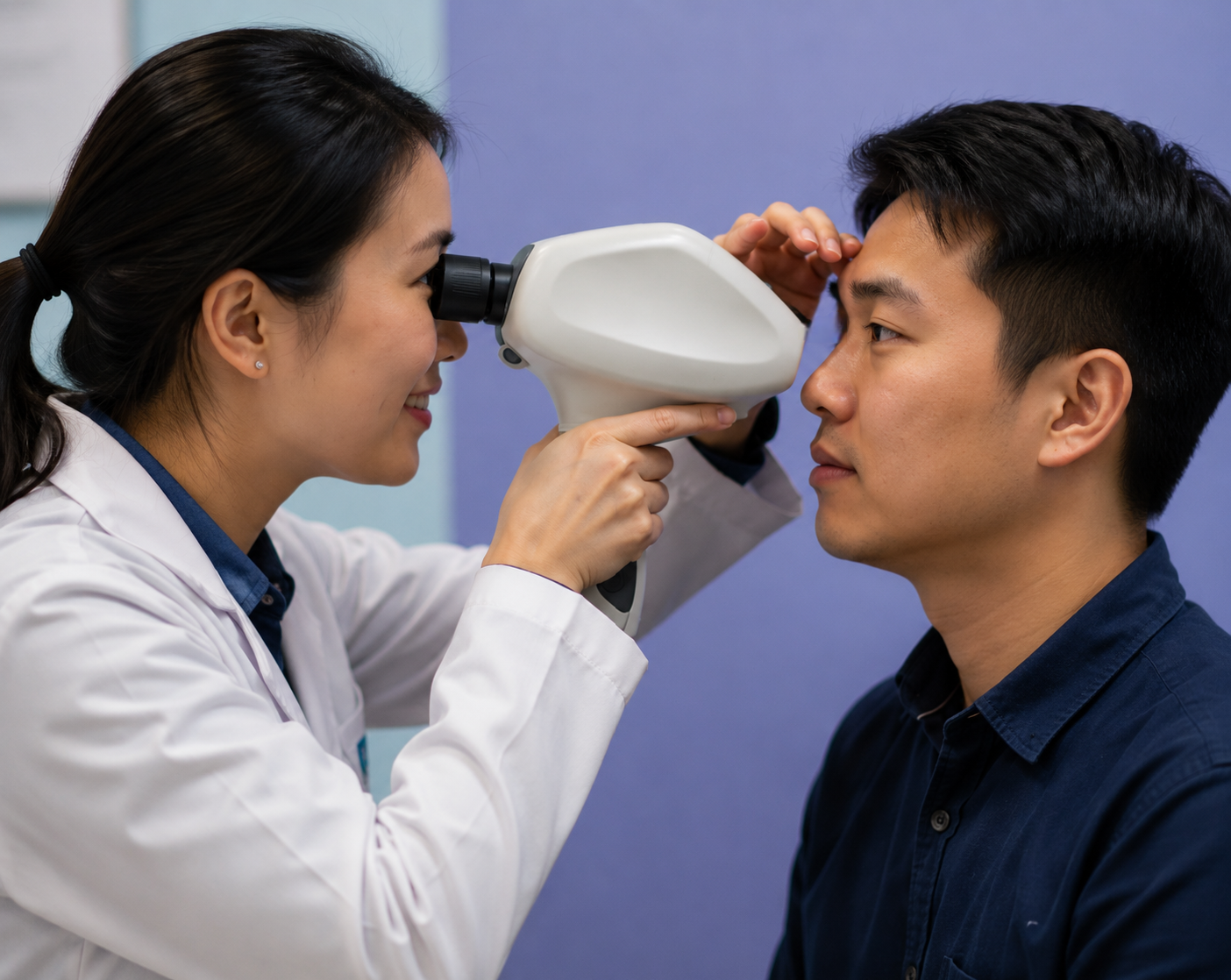
Eye pressure and optic nerve assessment at EyeDeal Optometrist, Bandar Puteri Puchong β part of a comprehensive eye examination, or available as a focused check for anyone concerned about glaucoma risk.
π¬ Book a Glaucoma Screening π Call to Book
Glaucoma refers to a group of eye conditions that can damage the optic nerve β the nerve that carries visual information from the eye to the brain. It's often associated with raised pressure inside the eye, though it can occur at other pressure levels too. Left unmanaged, the optic nerve damage it causes can affect vision, typically starting with peripheral (side) vision before it's noticeable in day-to-day life.
One thing that makes glaucoma worth screening for is that it can develop gradually and without obvious symptoms in its early stages β many people don't notice a change in their vision until the condition has progressed. This is why screening looks for signs of risk before symptoms appear, rather than waiting for a patient to report a problem.
Because early glaucoma often has no noticeable symptoms, a routine screening is one of the few ways to pick up on relevant risk factors or early signs before they affect daily vision. Identifying a potential concern early gives more options for monitoring or management than identifying it later.
Screening is not a guarantee β it cannot prevent glaucoma from developing, and it cannot guarantee that every case will be caught at an early stage. What it does is give you and your optometrist useful information to act on, as part of your overall eye health picture.
Glaucoma risk isn't limited to one age group, though it does become more common with age. Screening may be worth considering if any of the following apply to you:
If you're unsure whether screening is relevant for you, our optometrists can advise based on your history during a comprehensive eye examination.
At EyeDeal, glaucoma screening looks at a few different pieces of information together, rather than relying on a single measurement on its own.
Tonometry measures the pressure inside your eye. Pressure that is higher than typical can be one relevant factor in glaucoma risk, though it is only one part of the overall picture β pressure alone does not confirm or rule out glaucoma.
The appearance and condition of the optic nerve at the back of the eye is assessed for signs that may be associated with glaucoma-related changes.
Your optometrist considers your eye pressure, optic nerve appearance, and relevant personal and family history together, rather than treating any single measurement as a standalone diagnosis. This combined view helps determine whether monitoring, further assessment, or no action is appropriate.
There isn't a single interval that applies to everyone. How often screening makes sense depends on your age, personal and family risk factors, and any previous findings β your optometrist can advise on a suitable interval for you personally. As a general starting point, adults from around 40 without other risk factors are often advised to have periodic checks, while those with a family history or other risk factors may be advised to be screened more frequently. This is guidance rather than a fixed rule, and your optometrist's recommendation should take priority over any general guideline.
If a screening finds something that warrants a closer look β such as a higher eye pressure reading or an optic nerve appearance that isn't typical β your optometrist will explain what was found and what it may mean. This might involve monitoring the finding over subsequent visits, further assessment, or a referral for specialist evaluation where appropriate. A single unusual reading does not necessarily mean a diagnosis of glaucoma; it means further information is needed, which is why findings are followed up rather than acted on in isolation.
Glaucoma screening is available as part of a comprehensive eye examination at EyeDeal Optometrist, Bandar Puteri Puchong β a trusted local practice since 2010. Our team includes optometrist Bong Thze Thin, whose stated areas of focus include early disease detection, alongside 19 years of clinical experience.
Glaucoma is a group of eye conditions that can damage the optic nerve, often associated with raised pressure inside the eye, and which can affect vision β typically peripheral vision first β if left unmanaged.
Yes β in its early stages, glaucoma often doesn't cause noticeable symptoms. Many people don't notice a change in vision until the condition has already progressed, which is why screening looks for signs before symptoms appear.
Adults from around 40, anyone with a family history of glaucoma, and anyone who simply wants a baseline check are all reasonable candidates. Glaucoma risk isn't limited to one age group, so it's worth discussing with your optometrist regardless of age if you have concerns.
Screening typically includes an eye pressure measurement (tonometry) and an assessment of the optic nerve's appearance. Your optometrist considers these findings together with your history rather than in isolation.
No β the screening methods used are non-invasive and are not expected to cause pain.
Your optometrist will explain the finding and recommend an appropriate next step, which may include monitoring at a future visit, further assessment, or referral where appropriate. A single finding is not treated as a standalone diagnosis.